Get a full version of Civilization III:
Download Civilization III:
Civilization III download (377M).
Civilization III is a Strategy game.
Build, explore, conquer, and rule civilizations with this addictive strategy game.
Civilization III is a game of epic proportions, where you match wits against some of the greatest leaders of the world in a quest to build the ultimate empire. This highly addictive journey includes exciting new features that enrich your Civilization experience. Now you can explore new pathways, employ strategies, and build and manage your empire with even more powerful tools.
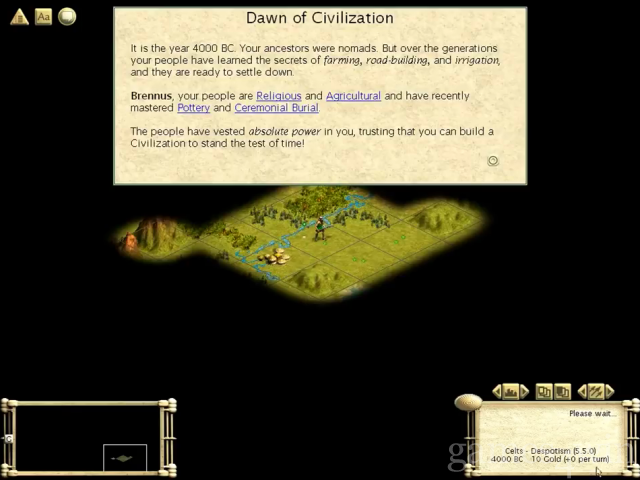
Civilization III follows the basic pattern of the previous games. Starting just with a single group of settlers in the year 4000 BC, you'll have to explore your world, establish new cities, build civic improvements and great wonders, negotiate with rivals for limited space and resources, wage war against your enemies, research new technologies and generally try to do all you can to stay competitive with the other civilizations while making sure things don't fall apart at home. Civilization III perfectly captures the epic sweep of the previous games but adds a few new features that make the game much more convenient and much more balanced.
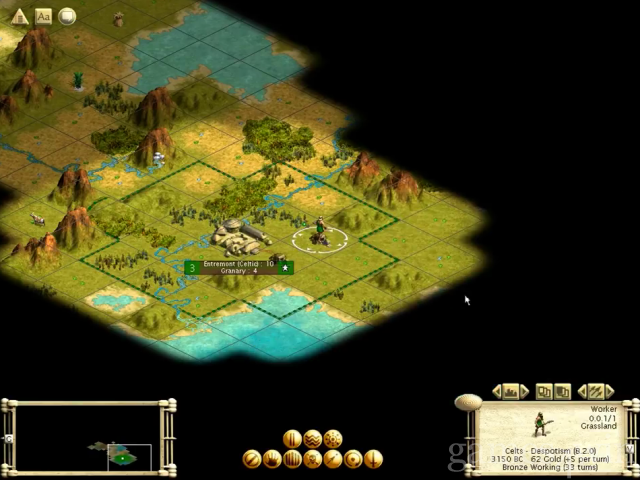
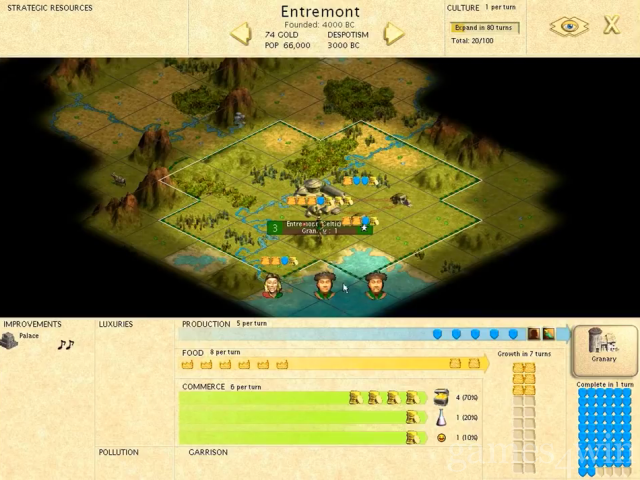
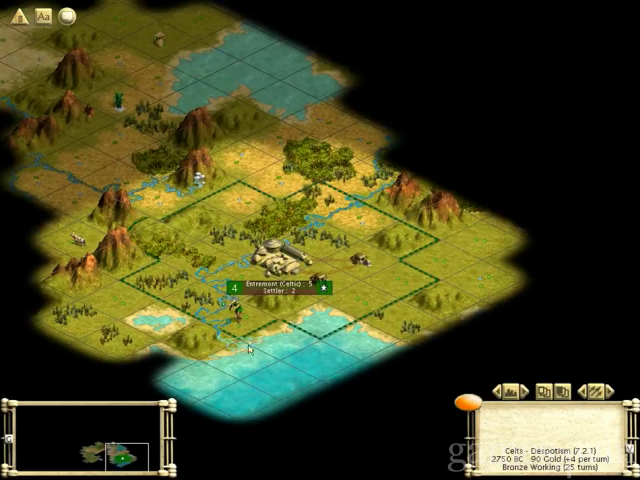
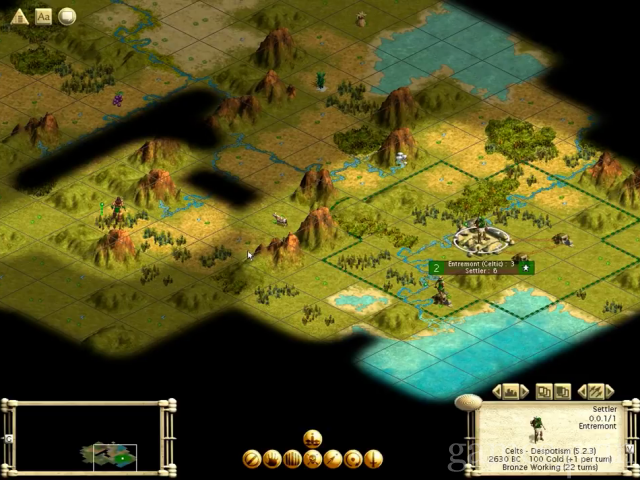
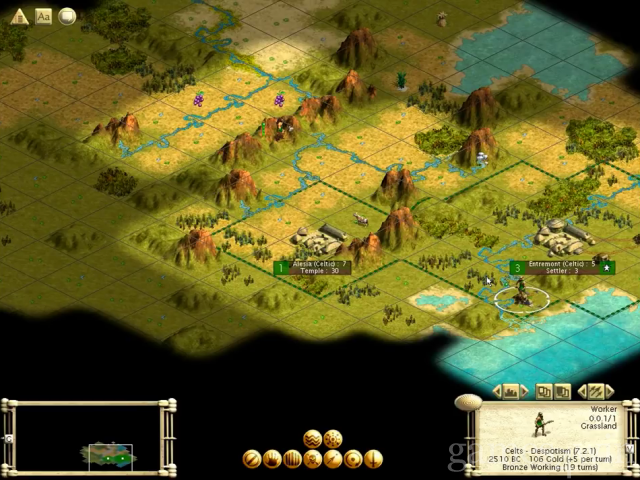
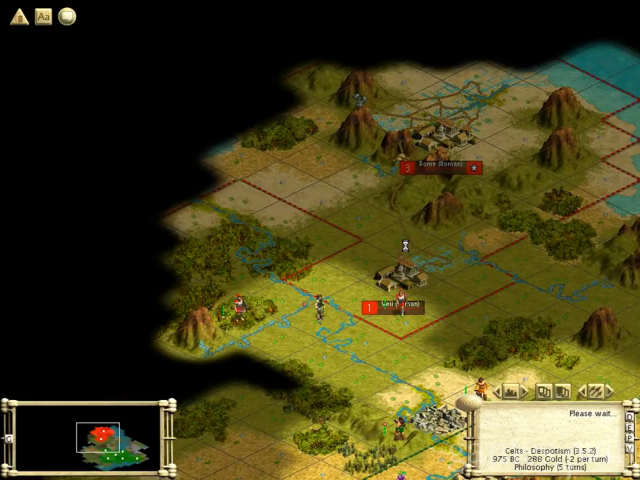
This time around a whole new impulse has been added that dramatically affects the way the game is played. The establishment and growth of your culture should be a top priority for any aspiring ruler. Civilization III uses a modified (and improved) version of the zones of influence rules from Alpha Centauri. As you build more cultural improvements (temples, libraries, wonders of the world, etc.) your borders expand bringing even more territory under you control.
Apart from denying your opponents the same territory, the expansion of your borders are important for several reasons. First off, you'll automatically get access to each resource within your empire's borders. Luxuries like silk or gems add to your people's happiness while wheat or cattle increase your food output. The inclusion of special strategic resources within your borders allows you to produce the various military units in the game. Iron is required for swordsmen, saltpeter for musketeers and uranium for nuclear submarines. Any city that builds a unit must be connected to the resource by a road (or to a harbor or airport that has access to the resource).
From time to time you'll find that you've been shortchanged on a key resource (like horses for chariots and cavalry, for instance). In that case, you'll need to trade with one of your rivals (who have probably also been shortchanged on something). To trade with a rival, your cities must be connected by a road (or, again, via a harbor or airport).
You're also able to see any activity within your own borders. Since every unit within your territory is visible to you, you can respond to threats as soon as they cross into your empire. And since rivals can't take advantage of roads within your empire, they move much more slowly than your own forces. Culture is also important in gaining sympathy and devotion from other civilization and their cities. If your own borders are close enough to a rival with a much lower culture rating, the rival city may just defect and join your empire. This works both ways, however, so be mindful of plopping down a small city next to your biggest cultural rival.
The overall trading and diplomacy setup is drastically different than it was in previous games. There are no spies, no diplomats and no caravans. Instead all of the functionality of these units is built into your foreign advisor's screen. Once you've established contact with a rival you can start negotiations. During the negotiations you can ask for and offer a very wide range of specific treaties. You and your rival can trade cities, diplomatic states, resources, money, knowledge and access to other civilizations. The tool for creating these deals is very straightforward but I was disappointed to see that the rivals are pretty passive. They tend not to suggest their own trades (opting instead to threaten you when you get a powerful advance or trade world maps with you). Opponents who take a more active role in trade would be nice.
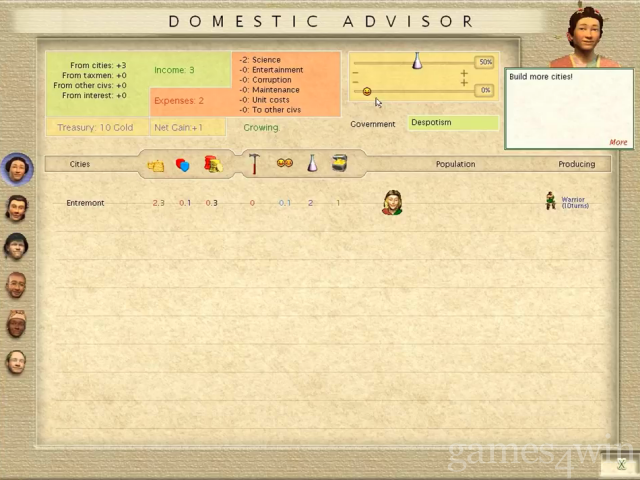
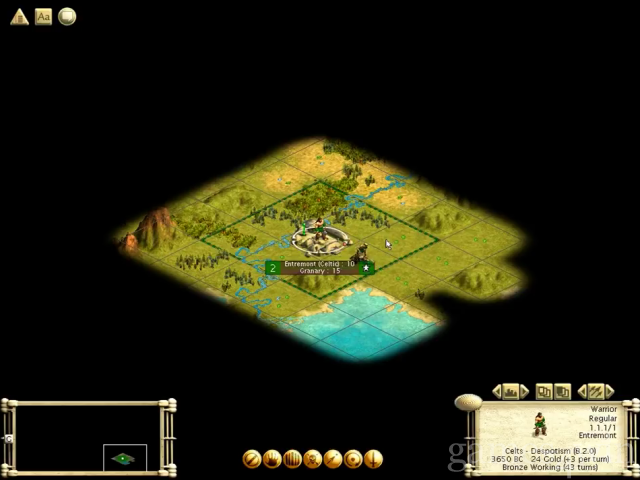
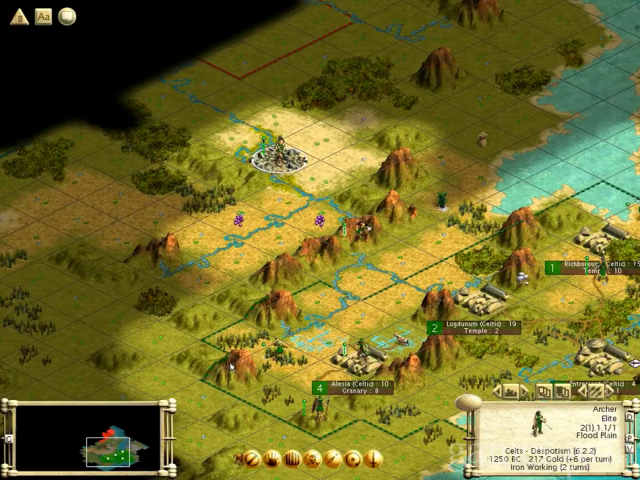
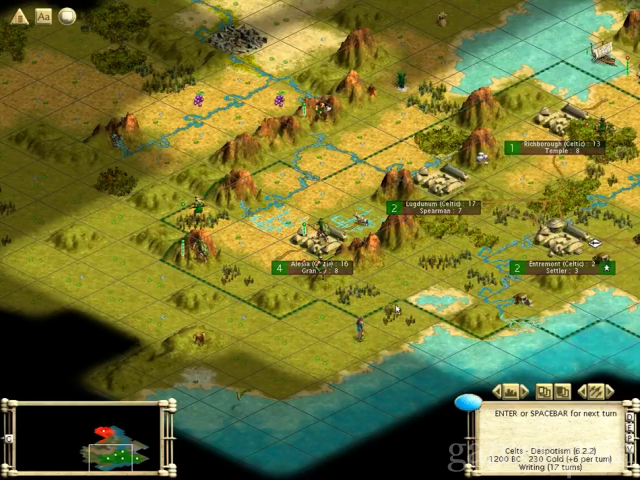
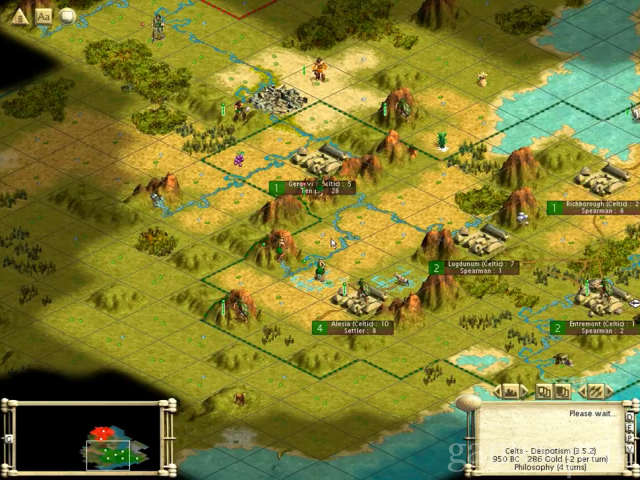
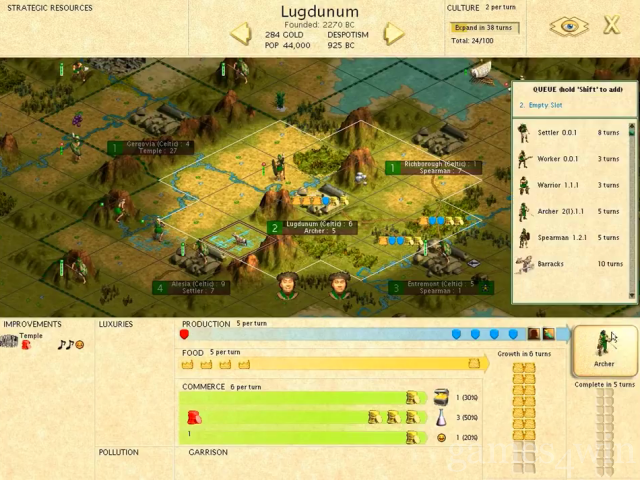
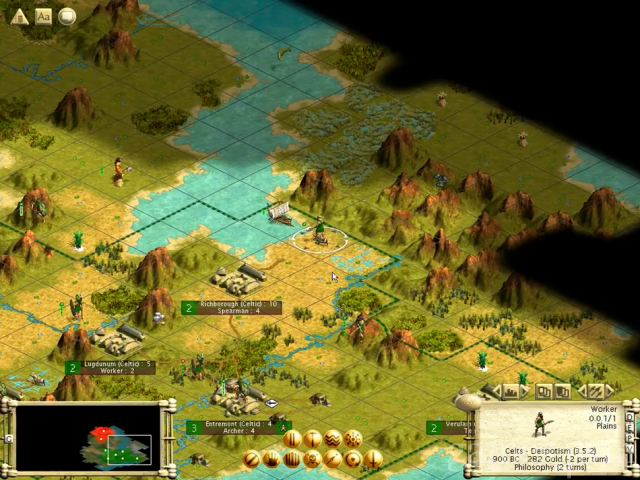
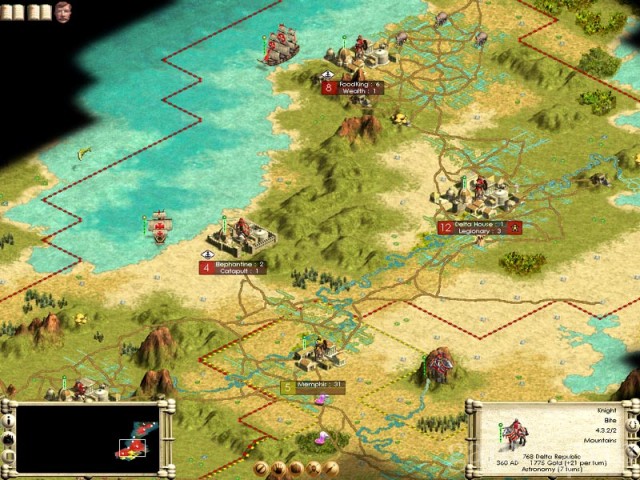
The interface is much better implemented this time around. First and most importantly the main game map lets you see which cities are growing, how long until they add another population point, what they're currently building and how long it will take to complete it. Seeing all this info on the main map makes playing the game incredibly convenient. And you can change production orders and buy improvements right from the main map. The advisor screens are laid out fairly well. The science advisor is particularly useful (although he doesn't always pick the right paths for your civilization).
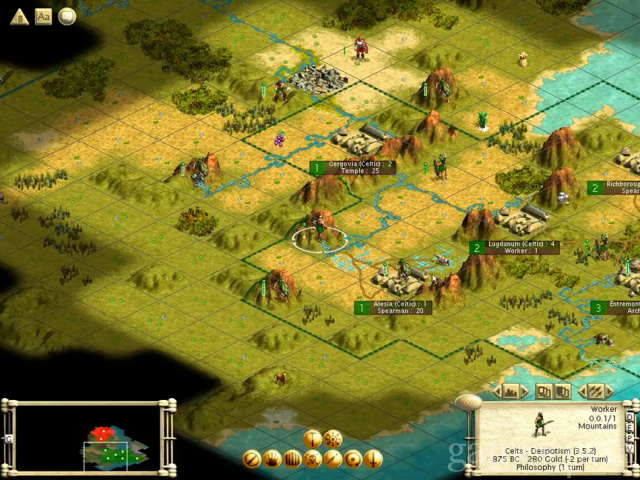
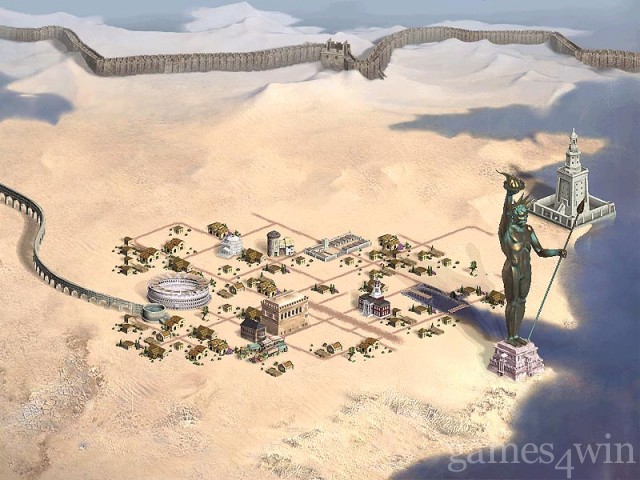
While the game isn't going to win any graphics awards it does have a tight artistic style. Cities, units, and the world itself are rendered in a very believable fashion that evokes a very well produced tabletop feel.
The Civilopedia has been also been reworked quite a bit to improve navigation. Everything's laid out in a traditional browser where you can flip back and forth from one topic to the next with almost no trouble at all. Every entry has links within it that direct you to other entries. Apart from covering the basic improvements and units in the game, the Civilopedia also includes lots of historical information (which you can digest or ignore at your leisure) as well as some really awesome sections on game concepts. If you need to know how corruption works or what to do to maximize city growth, then the Civilopedia will really spell it all out for you.
The unique unit for each civ is also really significant. Since each unique unit is meant to represent the pinnacle of that society's power, you have a good distribution of cool units throughout the ages. It kind of forces you to make a play for power in the era your unit appears which, depending on how you play can be a good thing or a bad thing. The Romans and the Egyptians with their legionaries and war chariots have to make a move in the ancient phase of the game while the Americans and Germans with their F-15s and Panzers can afford to put things off for a while. Since the F-15 and Panzers aren't ever made obsolete by other units, this kind of weights things in their favor. Still, the unique units almost all have a place in any player's strategy.
Civilization III is a worthy heir for the franchise and a definite must have for any strategy gamer who doesn't want to make fun of them.
Note: The Download Now link will download a small installer file to your desktop. Remain online and double-click the installer to proceed with the actual download.
Civilization III screenshots:
Sponsored Links:
Discuss it on Civilization III forum (1 post)
If you like Civilization III, try other games: Civilization II Test of Time, Civilization III Conquests, Civilization III Game of the Year, Civilization III Gold Edition, Civilization IV.
Civilization III system requirements:
Pentium II 300 MHz (Pentium II 500 MHz recommended), 32 MB RAM (64 MB recommended).
Systems:
Windows 9x, Windows 2000
Windows XP.
Game modes:
Single game mode .
Comments on Civilization III:
torrack: this game rocks
Total comments on Civilization III: 1.
Show all comments on Civilization III.
Commenting is closed. Please use forum to share your opinion.